
From Debt to Financial Freedom in Ireland: Kel Galavan’s Story

Before you read on: This post is for educational purposes only and does not constitute financial advice. Please seek guidance from a regulated financial adviser for your personal circumstances.
Key Takeaways
Kel Galavan went from six-figure debt and negative equity in Ireland to financial freedom - not through luck, but through small, consistent decisions over 15 years.
The No Spend Year™ in 2019 cut household outgoings by over €27,000 and was a turning point.
You don’t need to be debt-free before you start improving your finances; you just need to start where you are.
Investing in Ireland has specific tax rules (deemed disposal, exit tax, CGT) that UK and US advice won’t cover. Getting clear on these is one of the highest-leverage things you can do.
Time is the most underestimated ingredient. Life is not static, the version of you in 10 to 15 years will be shaped by the small choices you make now.
The free eBook Yes You Can Invest is a straightforward, clear starting point for anyone ready to take the first step.
The Before-and-After Nobody Talks About
Two photos. Fifteen years apart. One life transformed: not by luck, but by one small decision at a time.
If you’re living in Ireland right now and carrying financial stress; debt, renting while others build assets, working hard but seeing nothing left at the end of the month, this post is for you.
Here’s the short version:
Fifteen years ago: Renting, while paying a mortgage on a house she couldn’t live in. Six figures of debt. Bone-deep exhaustion.
The turning point: Two small children, and a decision to control what she could control.
The strategy: Small things done well, consistently, over time. Not a dramatic overnight fix.
The No Spend Year™: A year that cut household outgoings by €27,000 and changed everything.
Where she is now: Financially secure, working for herself, with more choices than hard decisions.
The core lesson: Life is not static. Time is the ingredient most people underestimate.
The quick win: One thing you can do today to start shifting your own picture.
Does This Feel Like You?
You’re working hard. Really hard.
But at the end of every month, there’s nothing much left to show for it. The money goes out as fast as it comes in, and a quiet little voice keeps whispering that this is just the way it is.
Maybe you’re carrying debt that feels bigger than you. Maybe you’re renting while others seem to be building assets. Maybe you’re holding it all together on the outside; good job, lovely family, doing everything right; but underneath, you’re exhausted.
And the most frightening thought of all: What if this is as good as it gets?
I know that feeling. Because fifteen years ago, that was me.
You’re Not Imagining It, And It’s Not Too Late
Here’s what I want you to hear before we go any further.
That exhaustion you’re carrying is real. The frustration is valid. And none of it means you’re bad with money or destined to stay stuck.
It means you haven’t yet had the right tools, the right framework, or maybe just the right moment to believe that change was possible for someone like you.
This post is that moment.
The Story Behind the Before-and-After Photo
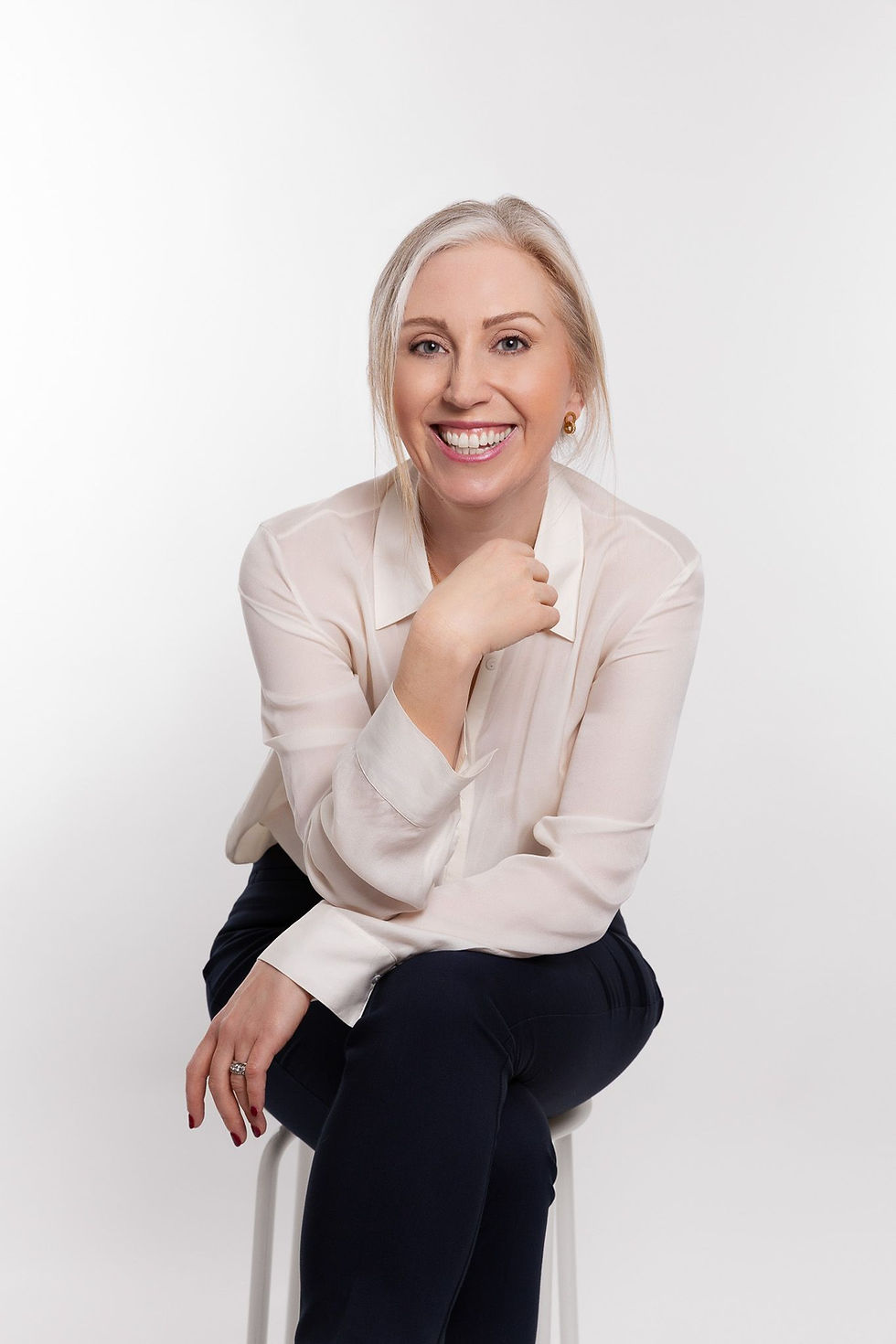
I recently found a photo from fifteen years ago.
And when I held it next to a photo from today, the difference stopped me in my tracks. Not because of how I look, but because of everything that isn’t visible in either image.
Here’s what that earlier picture actually showed:
I was renting, while also paying a mortgage on a house we couldn’t live in. Negative equity had locked us in, and 2008 had not been kind. The debt ran into six figures. I had worked for 16 years in a demanding career in the pharmaceutical industry. While I loved my job and my family, I was exhausted in a way that sleep couldn’t fix.
It felt permanent. Like the walls had been built specifically around me, and there was no door.
But I had two small babies who needed me present, not just physically there. And I had a deep, stubborn belief (some might have called it irrational at the time), that this was my starting point, not my story.
Here’s the truth about that period: I couldn’t control the Irish housing market. I couldn’t undo the debt overnight. I couldn’t snap my fingers and make the numbers look different.
But I could control my relationship with money.
So that’s where I started.
I made small decisions. Consistent decisions. I began paying attention to where every euro was going; not with guilt or deprivation as the goal, but with intention.
In 2019, after walking away from a 16-year career, I committed to a full No Spend Year™: a year of cutting outgoings deliberately, mindfully, and with purpose.
That year, we reduced our household spending by over €27,000.
Not through misery. Through clarity.
It opened something in me I hadn’t expected: a realisation that I had far more agency over my financial life than I had ever believed. I studied. I retrained as a Qualified Financial Adviser (QFA). I started writing, and eventually published Mindful Money: More Money, More Freedom, More Happiness, which became a sellout.
And somewhere in the middle of all of that, I quietly built a seven-figure net worth.
Today’s picture looks like this:
Financially secure. Working for myself; something that was never, not once, on my radar as a real possibility.
Life still has challenges, but they’re different challenges. They’re freer challenges. More choices rather than hard decision after hard decision.
The mortgage that once hung over me? History.
The exhaustion? Replaced by something that feels a lot like peace.
The Lesson That Changed Everything
I’m not sharing this to impress you. I’m sharing it because the gap between those two photos wasn’t luck or inheritance or a windfall.
It was a mindset shift around three things:
1. Your Locus of Control Is More Powerful Than Your Circumstances
There will always be things outside your control - markets, Irish interest rates, other people’s decisions, timing. But your relationship with money, your habits, your knowledge, your choices; those sit firmly inside your locus of control.
And that’s where all the leverage is.
2. Small Things Done Consistently Beat Dramatic Gestures Every Time
Cutting one unnecessary direct debit. Opening a savings account. Reading one article about investing in Ireland. None of these feel like “moves”. But compound them over months and years and they become a completely different life.
3. Time Is the Ingredient Most People Forget to Include
Fifteen years sounds like a long time. But consider: that version of you is coming regardless of what you do today. The question is simply what picture they’ll be holding when they get there.
How to Start Investing in Ireland: Right Now, With What You Have
You don’t need a windfall. You don’t need to be debt-free first. You don’t need to wait until the timing feels right - because I promise you, it never feels perfectly right.
Here’s a simple starting framework for anyone living and working in Ireland:
Step 1: Get Honest About What’s Coming In and Going Out
Not to judge yourself. Just to see it clearly. You cannot navigate what you refuse to look at. A basic monthly budget, income minus outgoings, gives you your starting point.
Step 2: Find One Thing Inside Your Locus of Control
One direct debit you could review. One subscription you’ve forgotten about. One small habit that’s costing more than you realise. You’re not overhauling your life - you’re finding one lever.
Step 3: Redirect Even a Small Amount With Intention
Even €50 a month into a savings account matters; not because €50 will change your life overnight, but because the act of doing it changes your relationship with money. It signals to yourself that your future is worth something.
Step 4: Start Learning About Investing and Financial Freedom, the Irish Way
This is the piece most people skip, and it’s the one that makes the biggest long-term difference.
Irish investors face specific rules that don’t apply in the UK or US:
Deemed disposal: a tax event every 8 years on funds and ETFs, even if you haven’t sold
Exit tax: currently 38% on gains from funds and ETFs
Capital gains tax (CGT): 33% on gains from individual shares, with an annual €1,270 exemption
Getting clear on these (without panic) is one of the highest-leverage things you can do before you invest a single euro.
My free eBook, Yes You Can Invest, is a good starting point; no jargon, no pressure, just practical Irish context written specifically for people living in the Republic.
“But My Situation Is Different”
I hear this a lot. And I want to address it directly.
Yes, everyone’s situation is different. Your debt may be bigger. Your income may be lower. Your timeline may feel shorter. You may be dealing with things I didn’t face, and I won’t pretend otherwise.
But the principle remains the same: life is not static.
The version of you in ten or fifteen years will be the product of the small decisions you make between now and then. Not the big dramatic gestures. The quiet, consistent ones.
And it’s never too late to start investing in Ireland. I’ve worked with students who began in their fifties and transformed their financial picture before they were sixty-five. I’ve seen people clear debt in their forties that they’d been carrying since their twenties.
The only move that guarantees nothing changes is deciding that nothing can.
Fifteen Years From Then to Now
Two photos.
Fifteen years apart.
The person in the first photo felt stuck. Exhausted. Like the walls were permanent.
The person in the second photo knows they never were.
Whatever your “before” photo looks like right now, you are not at the end of your story. You’re at the starting point of the next chapter, and that starting point has far more power in it than it might feel like today.
Small things done well. Consistently. With time.
That’s the whole formula.
I believe in it because I lived it. And I built Mrs Smart Money so that you wouldn’t have to figure it out alone.
If you’re ready to take the next step and learn how to invest specifically in Ireland (the right way, without the overwhelm), my free webinar is the best place to start. Head over to mrssmartmoney.com and grab your spot. No sales pressure. Just practical, Irish-specific guidance.
Frequently Asked Questions About Getting Out of Debt and Investing in Ireland
How did Kel Galavan get out of debt in Ireland?
Kel Galavan cleared six-figure debt; including a mortgage on a house she couldn’t live in due to negative equity after 2008; through small, consistent decisions made over many years. The pivotal step was her No Spend Year™ in 2019, when she cut household outgoings by over €27,000. She then retrained as a Qualified Financial Adviser (QFA), started investing in Ireland, and built a seven-figure net worth. Her core principle: focus entirely on what is inside your locus of control.
What is the No Spend Year™ and does it work in Ireland?
The No Spend Year™ is Kel Galavan’s own methodology: a 12-month commitment to cutting non-essential outgoings deliberately and mindfully. It is not about deprivation; it is about clarity and intention. During her own No Spend Year in 2019, Kel’s family reduced household spending by over €27,000. The approach is especially practical in an Irish context because it focuses on costs you can directly control, regardless of the Irish housing market or interest rate environment.
How do I start investing in Ireland as a complete beginner?
Start by getting a clear picture of your monthly budget: income minus outgoings. Build a small emergency fund before you invest. Then learn the Irish-specific tax rules that apply to your investments: deemed disposal (a tax event every 8 years on funds/ETFs), exit tax (38%), and capital gains tax (33% on shares). Once you understand the landscape, open an account with a regulated platform and start small and consistently. Kel Galavan’s free eBook Yes You Can Invest is a practical, jargon-free guide built specifically for the Irish market. Rise Money, Become a Confident Investor, is her flagship course that teaches people living in Ireland how to invest and build solid financial security over the long term.
Is it too late to start investing in Ireland in your 40s or 50s?
No. Many of Kel’s students begin investing in their forties or fifties and make significant progress before retirement. Consistent, small investments compounded over 10 to 15 years can meaningfully change your financial situation. The most important thing is starting; not the age at which you start.
What are the key Irish tax rules for investors?
Irish investors face rules that do not apply in the UK or US. The most important are:
(1) Deemed disposal: every 8 years, gains on funds and ETFs are taxed as if you sold them, at 38%.
(2) Exit tax: 38% on gains from Irish-domiciled funds and ETFs when you sell.
(3) Capital gains tax (CGT): 33% on gains from individual shares, with a €1,270 annual exemption per person.
Getting this right before you invest is essential. Kel Galavan’s Rise Money™: Become a Confident Investor course covers Irish investing tax in full detail.

Kel Galavan is a Qualified Financial Advisor (QFA), founder of Mrs Smart Money Ltd, Creator of the flagship course, Rise Money Become a Confident Investor and sellout author of Mindful Money: More Money, More Freedom, More Happiness. Kel is one of Ireland's leading financial educators, especially in the area of corporate wellness in both personal finance and investing skills.
She is a regular money expert on Ireland AM and RTÉ Radio, and has been featured in the Irish Times, Irish Independent, Sunday Times, and Newstalk.
With over 20 years of investing experience and a personal journey from six-figure debt to financial freedom, Kel founded Mrs Smart Money to provide practical, Irish-specific financial education for people at every stage of their money journey.

Disclaimer: The information on this blog is for general knowledge and discussion only, and does not constitute financial advice. You should seek independent professional advice before making any investment decisions. Investing carries risk. Links to third-party sites/products are not endorsements.


Comments